Welcome back, Deadline: Legal newsletter readers. Supreme Court justices were off the bench this week because they’re in between their October and November hearing sessions. But they still made plenty of news, in both their written work and public comments.
They started by adding two potent cases to a docket that is growing this term in both size and importance. Following last week’s agreement to review a discovery dispute over Elon Musk’s purported government efficiency effort, on Monday the court added two more appeals: on race in middle school admissions and congressional authority to ban home distilling. The court will keep adding cases throughout the year, with all the rulings in argued cases typically coming by July.
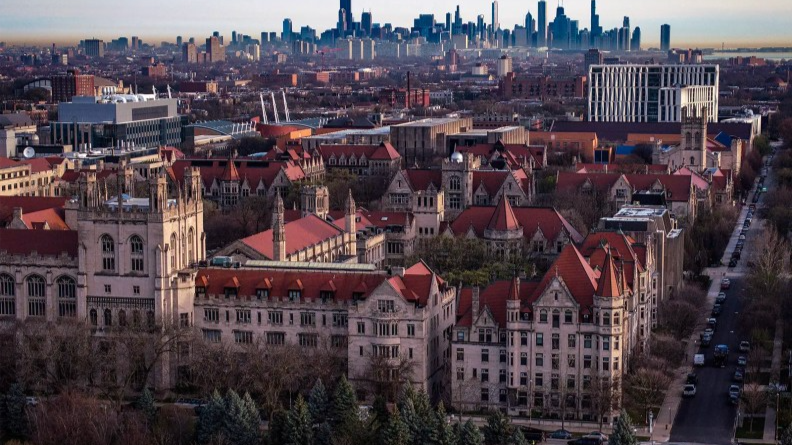
Justices Sonia Sotomayor and Neil Gorsuch were together again, speaking out for the second week in a row about a case the court refused to hear. Last week, Gorsuch joined Sotomayor to lament what they saw as unjust prosecution. This week, the Trump appointee joined the Obama appointee to critique what they saw as constitutional problems with car seizures in Chicago. It’s not new for this duo to team up in a certain type of case that lends itself to bipartisan agreement, but they have been ramping up that agreement so far this term.
Sotomayor’s statement appeared on the order list, which, as regular readers know, is an important document that announces the latest actions on pending petitions. That’s where we learned about the two new cases that the court took up and the (much longer) list of cases the court rejected. It takes four justices on the nine-member bench to grant review, and the court denies most petitions.
But Sotomayor’s statement reminds us that the justices occasionally offer their thoughts even when, as here, they agree with the denial but still find it important to highlight broader issues. These writings help us understand the justices’ priorities and what new cases the court might take up in the future.
Another sort of signal came from Justice Samuel Alito, who didn’t explain himself but noted that he wanted to review one of the petitions the court denied on the list. The failed petition came from Missouri officials who wanted the court to revive a rule that registered sex offenders must put signs on their doors for Halloween that read, “No candy or treats at this residence.” An appeals court said the rule wrongly compelled speech under the First Amendment. Although Alito merely noted, without explanation, his difference of opinion, the vote fits with his overall approach, because he generally backs law enforcement and has split from his colleagues in other First Amendment disputes.
Alito had company later in the week when the court rejected the Trump administration’s request to immediately enforce its preferred policy on gender-affirming care in prison. The justices did not explain the rare (albeit temporary) win for transgender people at a court that has ruled against them in a series of other cases. But whatever the justices were thinking, we know it wasn’t unanimous, because Alito and Justice Clarence Thomas both indicated (also without explanation) that they wanted to grant the government’s request.
Justice Elena Kagan made news outside her written work, with an appearance at a law school in Washington, D.C., the sort of speaking engagement that the justices will do from time to time. Kagan, who was dean of Harvard Law School before she became a justice, gave her GOP-appointed colleagues a failing grade when it comes to democracy. Reprising impassioned criticisms of rulings on voting and campaign finance that she has made in dissenting opinions, the Obama appointee said the court “has kind of blinded itself to the very deleterious effect of their rulings on how the political system works and has created a democracy that does not work as well as it should.”
Kagan apparently agreed with her colleagues this week in an election case, when the Supreme Court granted a Republican-backed request from New Hampshire to block the use of student IDs for voting in the midterms. In a brief unsigned order, the high court chided a lower court judge for, as the justices saw it, improperly interfering with state rules right before an election. Justice Ketanji Brown Jackson was the only one to publish a dissent, in which she contended the judge was justified in trying to protect voting rights.
The justices are still off the bench for another week, as they are set to return to the courtroom in November to hear the next batch of regularly scheduled arguments. But as Election Day approaches on Nov. 3, they will continue to field unscheduled emergency applications on voting and whatever else comes their way.
Have any questions or comments for me? I’d love to hear from you! Please submit them through this form for a chance to be featured in a future newsletter.