Welcome back, Deadline: Legal Newsletter readers. And thanks to Jessica Levinson for guest-writing last week.
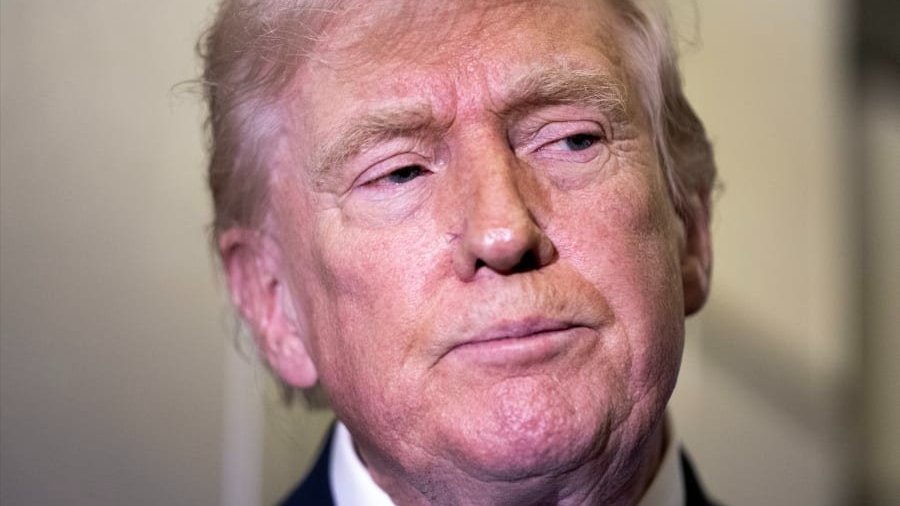
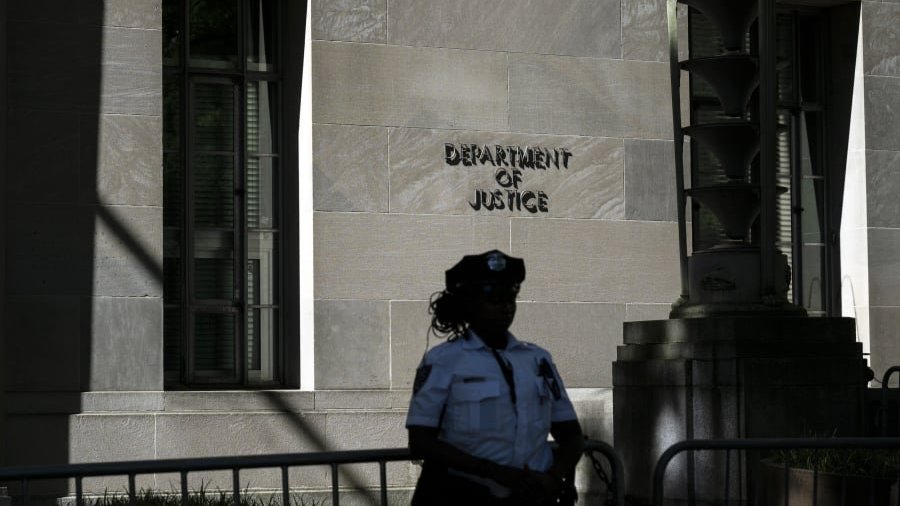
On Thursday, a banner bearing Donald Trump's face draped over the Justice Department's headquarters in Washington — a reminder of this president's claimed ownership over a department that has otherwise operated independently of the White House in modern times.
But on Friday, at another storied building in the nation's capital, the Supreme Court reaffirmed that Trump doesn't own the judiciary.
Splitting 6-3, with two of Trump's three appointees in the majority, the court rejected the sweeping tariff authority the president had claimed. Chief Justice John Roberts wrote that Trump couldn't use an emergency law to "impose tariffs on imports from any country, of any product, at any rate, for any amount of time."
Justice Brett Kavanaugh's dissent listed ways that Trump could still impose tariffs under different laws, which led the Trump appointee to conclude that the ruling "might not substantially constrain a President's ability to order tariffs going forward." Still, joined by Justices Clarence Thomas and Samuel Alito, Kavanaugh wrote that the decision could be "substantial" because the government might "be required to refund billions of dollars to importers who paid the IEEPA [International Emergency Economic Powers Act] tariffs, even though some importers may have already passed on costs to consumers or others."
Trump said he was "absolutely ashamed" of the justices who ruled against him, which would include his other two appointees, Neil Gorsuch and Amy Coney Barrett. He said they lacked "the courage to do what's right for our country," and called them "fools and lapdogs." The president said he's "very proud" of the dissenters and, following Kavanaugh's roadmap, said he will impose tariffs under other authorities. "I'm so proud of him," the president said of the justice he appointed in his first term.
Friday's 6-3 split, and Trump's reaction to it, are notable in light of mounting Alito retirement speculation. The split itself isn't surprising, but it reinforces that Alito and Thomas, the court's two oldest justices, are arguably its two most conservative as well.
So, if Trump were to replace one or both of those GOP appointees, he'd be restocking Republican seats with younger models. But when it comes to cases like Friday's tariffs ruling, he'd only be maintaining the GOP advantage, at best. Given his disappointment with his appointees not siding with him in every case, expect the president to take on an especially targeted vetting process for any vacancies that emerge. Similarly, expect the front-runners for any vacancies to do even more to try to attract Trump's attention — to make sure the president knows he'd be proud of them, too.
Have any questions or comments for me? I'd love to hear from you! Please submit them through this form for a chance to be featured in a future newsletter.