One question has been on a lot of people's minds this election season. What about the polling misses?

21 DAYS TO THE MIDTERM ELECTIONS |
|
|
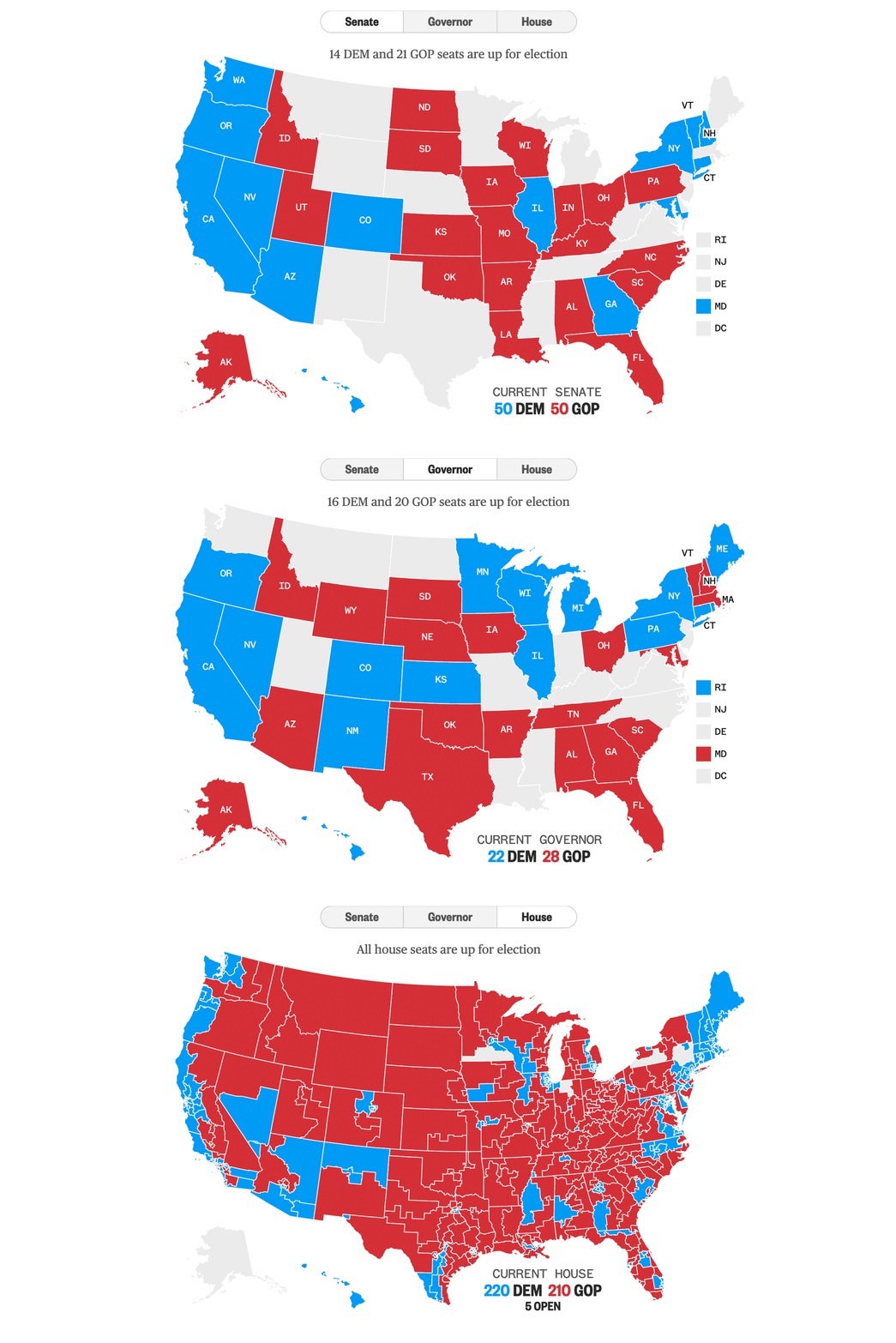
One question has been on a lot of people's minds this election season. What about the polling misses? We saw significant gaps between polls and actual results in some key states in 2016, we saw them again in 2020 and we even saw some in the 2018 midterms as well. Notably, these polling misses have not been evenly distributed around the country. Instead, they've varied by state and region, and there has been one particular region where the misses have been the most pronounced and persistent: the Midwest. With that in mind, there are two states that are crucial to the battle for Senate control this year that saw significant polling misses in 2016 and 2020. They are Ohio and Wisconsin.
2020 Final Polling Average (per Real Clear Politics) Ohio: Trump +1.0
Wisconsin: Biden +6.7
2020 Final Result Ohio: Trump +8.2
Wisconsin: Biden +0.7
In both state elections, polling dramatically overestimated Democratic support. The leading theory as to why this happened is that pollsters are struggling to reach a very specific demographic — white voters without college degrees who are aligned with Donald Trump. This is a demographic that is especially well-represented in the Midwest, creating a challenge for pollsters, who have been scrambling to find ways to ensure that their samples are more representative this year. Notably, current polling in Wisconsin, according to RCP, shows Republican Sen. Ron Johnson leading Democrat Mandela Barnes by 2.8 points. And in Ohio, Republican J.D. Vance is leading Democratic Rep. Tim Ryan by two points in the average.
If the polls in these states are once again undercounting Republican voters, then both Johnson and Vance are in terrific political shape. This leaves Democrats to hope that pollsters have cracked the code and that these races are as competitive as they look on paper, or — even better from the Democrats' standpoint — that pollsters are overcompensating and, this time around, undercounting Democratic support. |
|
|
MADDOWBLOG'S CAMPAIGN ROUND-UP |
|
|
Though some recent polling has shown Michigan Gov. Gretchen Whitmer with relatively comfortable leads, the latest Emerson College survey found the Democratic incumbent with a more modest lead over Republican Tudor Dixon, 49% to 44%. Meanwhile, Ohio's gubernatorial race appears increasingly uncompetitive, with the latest USA Today/Suffolk University poll showing Republican Gov. Mike DeWine leading Democrat Nan Whaley, 56% to 38%. Read the rest of Steve Benen's round-up here. |
|
|
New York's 18th Congressional District Democratic primary on Aug. 23 Pat Ryan, Aisha Mills and Moses Mugulusi Projected winner: Pat Ryan New Hampshire's 2nd Congressional District Republican primary on Sept. 13 Bob Burns, George Hansel, Lily Williams, Scott Black, Dean Poirier, Jay Mercer and Michael Callis Projected winner: Bob Burns Nevada's Republican attorney general primary on June 14 Sigal Chattah vs. Tisha Black Projected winner: Sigal Chattah Michigan Republican secretary of state primary on Aug. 27 Cindy Berry, Kristina Karamo, Beau LaFave and Cathleen Postmus Projected winner: Kristina Karamo Read more in MSNBC's key midterms match-up guide. |
|
|
|